
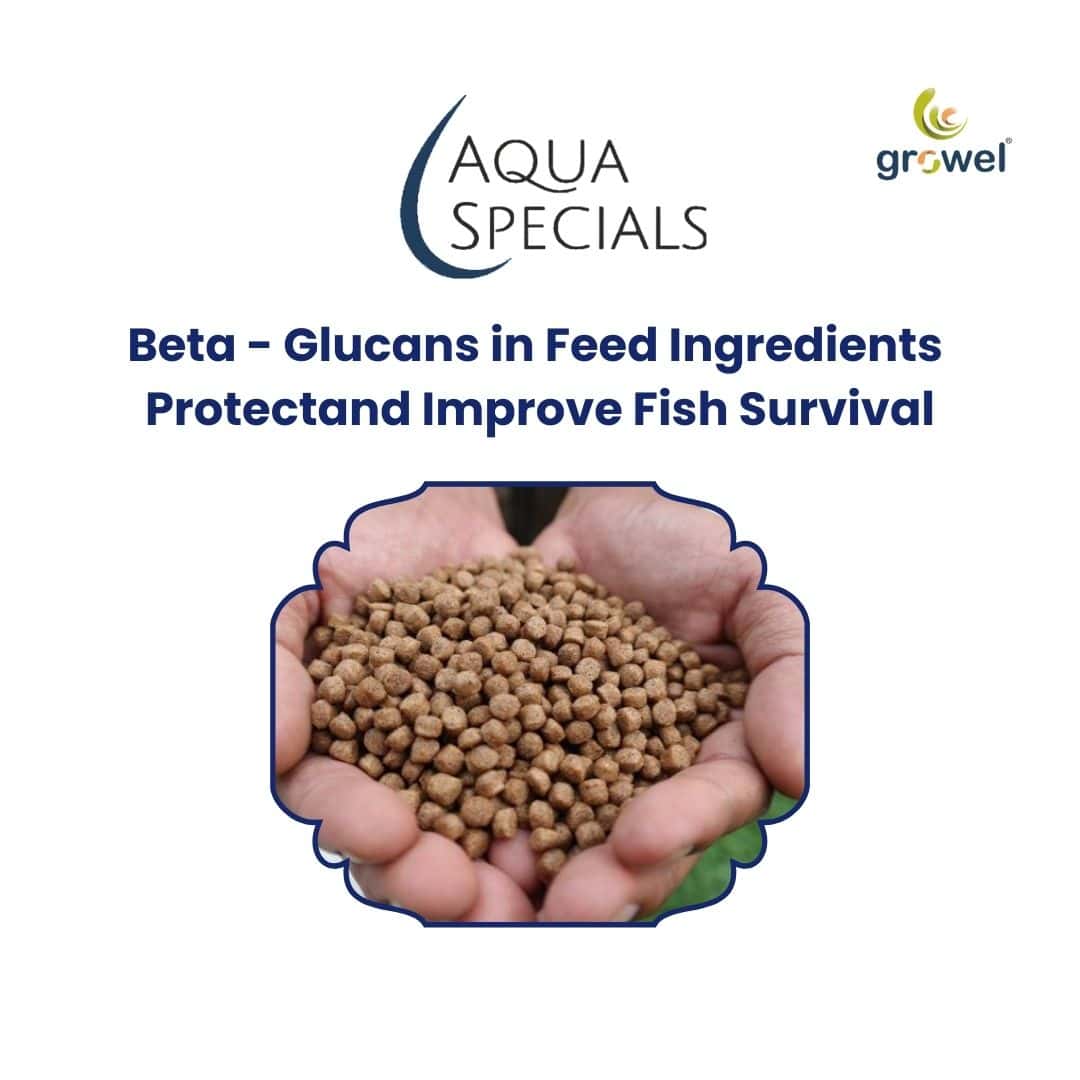
Intensive aquaculture production has steadily grown over the past few years causing unavoidable stress on animals due to confinement, transport, and handling, making them prone to diseases.
Global Technical Manager Joao Fernando Albers Koch from Biorigin explains the link between the global need for quality fish and the need to carry out this production in confined and stressful environments, which leaves animals prone to stress and the emergence of pathogens.
“We have a sustainable solution using purified beta-glucans following global trends towards reducing, or withdrawing, the use of antibiotics,” he says.
“The trend to reduce the use of antibiotics in animal production has led to the search for alternative solutions to control pathogens, including functional compounds,” he says. In are widely studied in aquaculture. aquaculture, harmful effects on the immune system are caused by incorrect management practices, stocking densities beyond the support capacity of the production systems, poor nutrition or unbalanced diets, environmental changes, sudden increases or decreases in water temperature, and low water quality etc.
The weak immune response of fish under such conditions is associated with acute or chronic stress. However, the immune system can also be beneficially manipulated, increasing fish production. Immunomodulators boost fish immunity and, therefore, their efficacy in fighting infectious agents. One such example of an efficient immunomodulator is beta-glucans, which are widely studied in aquaculture.
Norway Researchers were pioneers in studying how beta-1,3/1,6-glucans work and their effectiveness in fish and shrimp. They laid the scientific groundwork for beta-1,3/1,6-glucan use in aquaculture. A Norwegian biotech company started producing MacroGard in 1990, initially as an adjuvant in fish vaccines and later as a feed grade product in 1992.
Studies have shown that MacroGard improves disease resistance, reduces mortality, and enhances growth and feed efficiency in various farmed fish and shrimp species
Beta-glucans act directly on immune mechanisms, boosting fish and shrimp natural defences, therefore these compounds have been applied in aquaculture prophylaxis.
Beta-glucans play a beneficial role on the wound healing process due to its effects on immune cells as farmed fish may be wounded during handling, transport, vaccination, fights, and due to the presence of parasites. Pathogens usually gain
entry through these wounds.
The aquaculture industry in Norway has been using this product for more than 20 years in fish feeds. A comprehensive database has been generated by documenting the effects of the product under field conditions.
MacroGard is used to improve performance and to help farmers manage healthy production and control challenges such as E. coli and Streptococcus infections in livestock farming It is also used as a feed ingredient for premium, super premium
and veterinarian pet food.
Blogger:
Dr. Sathish Prasad
Senior Scientist – Aquatic Animal Health
Growel Innovation Center,
RS NO.57, Chevuru Village, Sriharipuram Panchayat, Mudinepalli Mandal, Krishna District – Andhra Pradesh India – 521329
Email: [email protected]